Featured

Going Grace, Staying Power

All too often when missions is talked about, it is seen as the exclusive sphere of message bearers (missionaries) who actually go out as frontier cross-cultural workers or who are in some fashion engaged in full-time service related to it.

There is too often, a forgotten or ignored group of people – those who remain at home. They are those who do not go out to the field, who are not engaged necessarily in any physical sense in the practical ministries related to the unreached.

They have regular jobs as civil servants, business professionals, bureaucrats, technocrats, artisans, traders, doctors, professors, and so on.

This category of persons are sometimes not taken as seriously in the missions movement or even by some message bearers, often thought of as not caring enough for the lost, worldly-minded and as having a less-than-a-missionary status in God’s scheme of things.

The twist to it is that many of these people themselves who live ‘regular’ lives back at home also consider themselves to be not quite up there as the message bearers who have left all in order to sacrificially labor among the unreached.

I recently had a friend of mine who expressed to me all the guilt and frustration she felt over what she called her lack of mission life.

One whiff of truth remains that the Bible has no basis for this kind of attitudes and dynamics among disciples.

Practically speaking, it is not even possible for all disciples to ‘Go’ as message bearers. Some, in fact, most will have to stay at home.

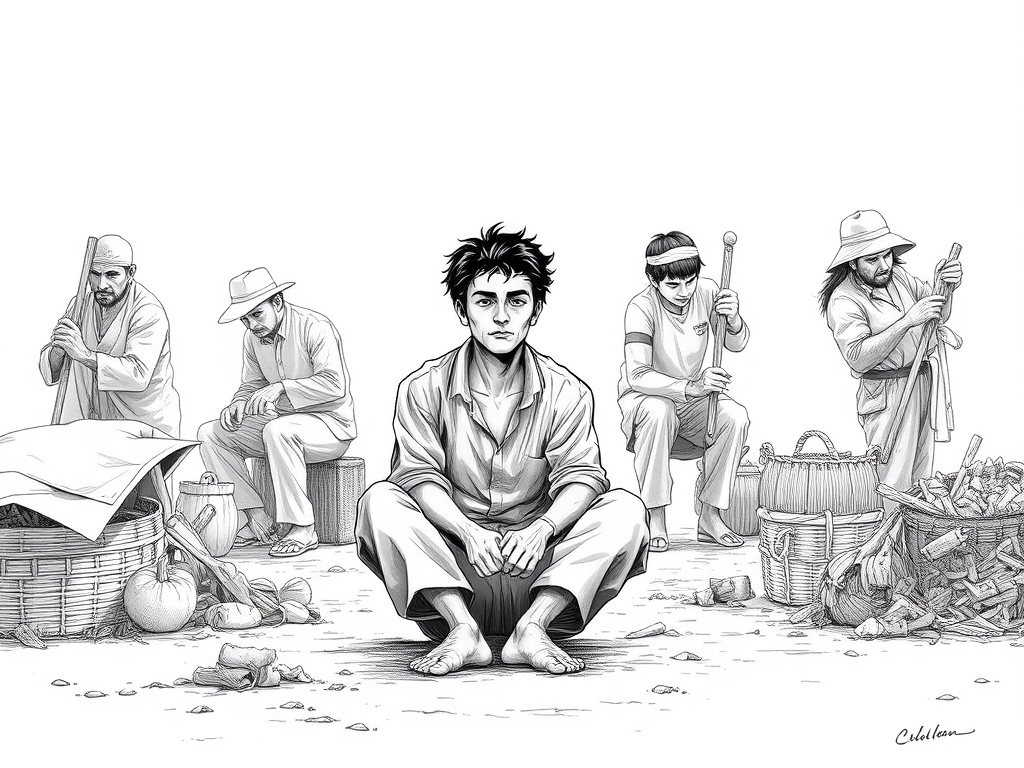
An incidence in the Old Testament drew out a very important principle we need to consider. David had set out with 600 men in pursuit of their raiding enemies but at a place called the Brook of Besor, 400 of these men became too tired to pursue and fight on.

So David and 200 men continued with the chase, while 400 stayed back at the Brook to rest and guard their stuff. Those who fought on, didn’t think the others deserved the spoils, so David said:

“Who would listen to you in this matter? For as his share is who goes down into the battle, so shall his share be who stays by the baggage. They shall share alike.” (1 Sam. 30:24)

Based on this principle, we cannot glorify one or the other category. In God’s eyes, they are equally relevant. They will all share alike!

Those who go and those who “stay by the stuff” will share alike in the reward

However, it is necessary to clarify what it means to “stay at home” as far as God’s purposes are concerned. In this story, not everyone at home in Israel was eligible for the spoils but those 400 who “stayed by the stuff.”

To understand what it means to “stay at home” and still ‘share alike’ in the spoils, there are at least 2 questions we need to ask ourselves as we look at the example of David and his men:
1. Why did they not go on to fight (why did they stay back at the Brook Besor?)
2. What were they doing back there when they stayed away from the battle front?

If we can answer these questions very well, we will be able to understand how God looks at his servants who ‘stay at home’ and message bearers out in the field to be equal in His eyes, and what he expects of them.

In response to the first question, “why did they stay and not go to fight?” we recognize the fact that the decision to stay at the Brook Besor was not an arbitrary one. It wasn’t even a casual decision. It was a necessary one. They were unable to go. This implies that if the circumstances were different, they would have not stayed but gone.

Those who stay at home still have their hearts consumed with passion and interest in what God is doing around the world, but cannot physically go. Most times this has to be because they have clearly identified their God-given role in missions as best done at home or some genuine reason might keep them from going.

With the second question, we recognize that their home activities of a truth still have some kind of connection with the labors of the Message Bearers out on the field.

Those activities may be providing a pool of resources from which they sacrificially and lovingly support those on the frontiers or they may be creating awareness about their needs or recruiting workers to join them or interceding for them. David’s men stayed back to “guard the stuff.”

Staying at home should be, and indeed is a calling as much as going to the field as a message bearer is a calling.

None, in God’s eyes is a lesser calling. What each of us has to be certain about is that whether we stay at home as or go as ‘Message Bearers’ we are walking in God’s calling upon our lives. When that happens, they both will share the rewards equally.

___________________________

This post by Joel Iyorwa was originally published on the Abandoned Times Blog by GMMI (formerly SVM2) on May 3, 2018

Featured

By The Rivers of Babylon

I think the church today is reading Psalms 137 wrongly, mostly. In this post, I want to explain why I believe we have mostly got it wrong this whole time and provide an alternative and what I believe is a better interpretation or understanding of this Psalm, the way I believe God wants us to read and understand it.

Here’s the Psalm (137:1-4):

Beside the rivers of Babylon, we sat and wept
    as we thought of Jerusalem.[a]
We put away our harps,
    hanging them on the branches of poplar trees.
For our captors demanded a song from us.
    Our tormentors insisted on a joyful hymn:
    “Sing us one of those songs of Jerusalem!”
But how can we sing the songs of the Lord
    while in a pagan land?

Psalm 137 is often read, taught, and presented as something of a model prayer or a model response by someone who is experiencing a difficult oppressive or unjust situation. Basically, the sentiment goes “just hang your harps on a tree”. Yeah, when you find yourself “by the rivers of Babylon”, it is an unlikely place to sing God’s praises, so just hang up the instrument of praise, and wait for God’s deliverance and then you can resume the music and singing about God. We don’t quite put it like that, but that is essentially what we are saying when we hold up Psalm 137 as a good model, or when we are echoing its core sentiment in prayer.

When Rastafarians made “rivers of Babylon” a pop culture phrase in the seventies, they helped normalize this troubling and frankly, false understanding of the Psalm. From the original song by the Melodians in 1970, to Perry Henzell’s ‘The harder they come’ movie which featured it as a soundtrack two years later and Boney M’s cover in 1978, the phrase ‘rivers of Babylon’ which is lifted directly from the first verse of Psalm 137, has come to symbolize something we feel is unjust and unfair to us. “How can we sing the Lord’s songs in a strange land?” we ask in arrogant if not ignorant rhetoric. A “strange land”, we conclude by implication, is not a place to sing God’s songs. This is terrible theology, obviously.

God’s praise shouldn’t only be sung in times and places of comfort and familiarity, but even in times and places that are hostile, strange, undesirable, and so on. For this reason, Psalm 137 should be taught as a bad prayer, it should be presented and understood as an immature and theologically faulty prayer or response to anything, anytime, and anywhere. A responsible child of God should never “hang up” his instruments of praise and refuse to “sing the Lord’s songs” in a “strange land”.

But more importantly, Psalm 137 should be understood in it’s true missiological context. There is a significant consensus that this Psalm was written post-exile, so it is basically a retrospective poem that sums up the author’s perspective on the Babylonian exile and how he or they reacted or responded to it while they were there. They hung up their harps and refused to sing the Lord’s songs when asked to do so. Basically, the heathen nation of Babylon often gave the people of Israel, or at least this author, the opportunity to tell them about God in their music and songs and they rejected those opportunities because they or at least this author, was busy living in victimhood and a self-centered mentality that hindered them from seeing God’s perspective.

Throughout the scriptures, God had made it clear that He wanted the people of Israel to be a “light to the gentiles” and to be a “blessing to all nations”, an opportunity that sometimes came during times of exile like this one. Had this author been thinking of God’s mission, he wouldn’t have hung up his harps, let alone write a psalm celebrating the fact that he or they, did so. So, when we read Psalm 137, we must understand that it is not a Psalm that takes God’s side, that it is a Psalm that isn’t a model for us but an example of how not to behave when we find ourselves “by the rivers of Babylon”.

Have you found yourself by the rivers of Babylon? Has God given you any opportunities to bring gospel light and impact to other nations? Are you simply in a terrible place in your life right now where you feel like you’re suffering unjustly? Whether your “rivers of Babylon” is figurative, metaphorical or literal, how are you responding? What kind of prayer are you praying? Is your prayer one of complaints about your inconveniences or an angry outburst against God or any other form of hanging up the harps and refusing to sing the Lord’s songs?

Some people say, “how can I sing the Lord’s songs” when I cannot make ends meet in my life?”, others say “how can I go and be a missionary where I cannot be sure if I will ever find a spouse to marry?”, and others say “how can I give to missions when I have not yet built a house for myself or taken care of my own needs?”, others even react like Jonah “how can I sing the Lord’s praises to these people who are terrorizing us?”. Whatever is the version of Psalm 137:1 that you have written for yourself, I hope you will find a kingdom perspective in your circumstances and understand that God’s need to be known, praised and worshipped by all nations supersedes whatever your own desires or unmet needs are, even if it involves your suffering and loss.

When we properly understand God, we might not even have to always wait for Babylonians to ask us to sing them a song of Zion, we might often even be proactive about offering to sing the songs of Zion when we find ourselves by the rivers of Babylon, in a strange land. We might find ourselves asking the Lord to give me opportunities to sing the songs of Zion in strange lands so that strange peoples can hear of you. This attitude isn’t only for those who are currently by the rivers of Babylon, but even those who are in the comfort of their own familiar land, in Zion, they also, should be seeking to sing the songs of Zion to those in a strange land. For some, it might mean they go there physically as short-term or long-term missionaries to sing them those songs, for others, they’ll feel burdened to sacrificially give in ways that aid the singing of those songs of Zion to strange lands, and maybe for others, they’ll feel restless until they pour themselves out in fervent prayer so that strange and distant lands can also hear the songs of Zion.

The songs of Zion are meant to not only be our own ritual, but also as something to be sung to distant lands. I am so thankful that not all the children of Israel interpreted the Babylonian captivity like the author of Psalm 137. Daniel and his friends did not. Through their active testimony and singing, Nebuchadnezzar and many others in Babylon came to know about the one true God and worship him. The same Babylonian captivity that was to Daniel an opportunity to bring God to a strange land, was for this author of Psalm 137, a thing to be mourned and a moment to switch off and wait passively for things to become convenient again before he can sing the songs of Zion.

May God give us a kingdom perspective through which to understand our lives and interpret the things that God allows us to experience. Psalm 137 is an example of how not to be a global and kingdom minded disciple of Jesus, it is an anti-kingdom attitude, it is not a prayer for us to emulate.

Featured

Praying or Playing – Part II

“Then He said to His disciples, “The harvest truly is plentiful, but the laborers are few. Therefore, pray the Lord of the harvest to send out laborers into His harvest.”Matthew 9:7-38

Are you called to be an intercessor, or do you regard yourself as an intercessor for missions? Let me share some important principles and considerations to keep in mind if your engagement is to move beyond the realm of playing to the kind of prayer that will actually make a difference and be effective. For if our praying isn’t making any difference, we might as well be merely playing.

But let us first make it very clear that praying isn’t an exclusive calling for some but not for others. While this way of thinking is popular these days, it doesn’t reflect the teaching of the bible at all. In scriptures, the call to prayer is an open call and it is God’s expectation for everyone who is a follower of Jesus. It makes sense though, that clearly some people choose to give themselves to it more fully than most and see themselves as being primarily dedicated to praying. So, while we are all called and expected to pray for missions, for example, some of us might decide to turn that expectation into a personal responsibility. This is who an intercessor is; they see themselves as someone with a personal responsibility to pray so that reality can match God’s ideal and so give it significantly more attention, time and effort.

The focus of this article is not to examine the spectrum of effort and dedication in missions praying, but to examine its spectrum of effectiveness. Effectiveness being the extent to which our praying is making a difference in the Missions’ enterprise and among the unreached. In the sphere of all that is regarded as [missions] praying, the range of effect goes from none to significant, an idea James alludes to when he wrote: “the effectual fervent prayer of the righteous man availeth much” (James 5:16).

Let me suggest three factors that determine how “much” our prayer and intercession “avails”, or if you like, the extent to which our praying makes a difference. As people dedicated and committed to praying for missions, whether as an individual, a family or small group or as a church congregation, these principles will enrich our prayer and place them on a probable and more credible path to effectiveness.

1. BurdenPraying with a burden

One of the most important precursors to effective praying is what I like to refer to as burden. It is one of the undeniable underpinnings of the kind of prayer and intercession that makes a difference.

We see this in Matthew 9, especially in the context of verse 35-38. Before Jesus tasked them with praying, two important facts come before.

First, Jesus is said to have been “moved with compassion” when he saw the multitude in their present condition.  The MSG translation puts it as “his heart broke”, the NIRV renders it “he felt deep concern” while the WYC translates “he had ruth on them”, ‘ruth’ meaning distress and grief. Secondly, before they were told to pray, Jesus tried to help them understand the magnitude and import of the problem. He told them “the harvest is plenty, but the laborers are few”.

The first fact here about Jesus feeling compassion, ruth and his heart being broken, speaks about burden. This is what burden is and looks like. To have a burden is to be devastated inside about something, it is to feel so disturbed by it that you become in essence restless. The second fact about Jesus telling the disciples just how bad the situation was describes how you get to having a burden. By describing to them just how bad things were: “big harvest about to rotten and few people to gather it”, Jesus was trying to get them to see the crowds as he was seeing them and why, so that they could also be “moved with compassion” and be “broken” in the same way that he was too, and so be able to pray for them.

Friends, this is the basis for effective prayer. Jesus did this because he knew that if they failed to “see” the problem properly, they will also fail at the task of prayer. You cannot pray for anything, at least not effectively if you’re not “moved” in your heart about it, or if it doesn’t “break” your heart. When a subject matter stirs up compassion and ruth inside you and breaks your heart, then you have come to the right place of prayer. This is what I refer to as burden.

Too many people are trying to pray for missions without first coming to such a moment. They lift their voices in prayer, but their hearts are not really moved or broken by it, they have not really comprehended the enormousness and gravity of the problem. For some, the unreached are just a statistic, a strange and distant thing that has no direct bearing on them, they have no sense of the urgency around issues relating to unreached people or the process God designed to bring them to faith. So, when they pray, their prayers are shallow, coming from somewhere inside the head, rather than from the deep crevices of a broken heart. That kind of prayer cannot be effective.

Time will fail me to give proper attention to other examples of this in the Bible, but perhaps one deserves a quick mention, and that is the story of Hannah in the Old Testament. Hannah’s prayer for a son is one of the most powerful and most effective prayers we can point to in all of the bible. But just before she made that prayer, the bible describes how a burden was formed inside of her:

And her rival also provoked her severely, to make her miserable, because the Lord had closed her womb. So it was, year by year, when she went up to the house of the Lord, that she provoked her; therefore she wept and did not eat.” (1 Sam. 1:6-7)

These verses are describing the burden for a child that Hannah felt and how it was instigated. Her famous prayer came only after she felt provoked and miserable over her childlessness. This was burden, and it was what fueled her prayer. Had Hannah not seen the problem with her childlessness, or had she explained it away, she wouldn’t have been able to pray for a son so effectively. Before we can pray effectively for missions, we must feel that provocation and misery in our hearts. That feeling that says, “this is not okay, it has to change” or “I can’t accept this anymore”. As an intercessor for missions, have you come to such a place where the state of the unreached leaves a deep wound on your heart? If you have, you are on good footing for effective prayer. If you have not, it is something to trust God for, that revelation and understanding of seeing them the way God sees them. The details related to this process are beyond the scope of this article, but I want to encourage the reader to seek to come to a place of burden so they can pray and intercede effectively.

2. PrecisionPraying with specific focus

Another principle regarding effective prayer for missions, or anything generally for that matter is for lack of a better word, precision. I use the word precision here to mean being exact and specific as against being generic and having a everything-everywhere attitude to prayer.

Again, staying with the example of Hannah for a moment, we see her later recounting the experience in testimony as she gave thanks to God for answered prayer: “for This Child I prayed” (1 Sam. 1:27). Effective prayer is always specific, not general, or generic. I have yet to see any prayer in the bible that God answered that was not specific. This was not like praying “Lord, you know there are barren women out there, please give them children”. No, it was a prayer “for this child”. I often hear people praying for missions: “Lord, please bless all the missionaries out there, bless the work of missionaries everywhere in Jesus Name”. We might pray like that and feel happy with ourselves, but such generic prayers are far less effective than when we do so precisely. Like firing a gun, we want to be aiming it rather than just firing it into the air, if we want to be effective with it.

Jesus himself while teaching about prayer, shortly after the popular ‘ask, seek, knock’ statement, went ahead and taught: “what father among you, if his son asks for a fish, will instead give him a serpent; or if he asks for an egg, will give him a scorpion?” (Luke 11:11). The point being that God listens to our prayers to their most specific and minute details, and so responds. He’s not calling us to pray for ‘something soft and round’ when what we really want is bread, or to pray for ‘something oval and white’ if what we want is an egg. The most effective prayer is not to pray ‘Lord, give us anything edible’ but to be specific about what kind of edible thing we want, namely, fish or egg or bread, etc.

This is a very important principle for effective prayer. God is not put off by it, He actually wants it. You might recall how Abraham missed an opportunity to save Sodom and Gomorrah because he wouldn’t go to further details about the number of “righteous people” who should be sufficient to save the city. Perhaps, had he asked for three people, it might have been a different outcome, but he stopped at ten (see Gen. 18:20-33).

A lot of missions praying today is so broad and general that it is not making the kind of difference it should be making. We need to go from “Lord, bless all missionaries everywhere in the world” to “Lord, I lift up the Sunda and Madura peoples in Indonesia to you, move among them, and bless brother Wes and sister Chloe who are laboring among them”. If we want God to move, let us learn to pray for “this child” and for “fish” and for “egg” and for “bread”, for he will not give us something we have not prayed for. General prayer will at best produce generic results and so ends up not being as effective.

The implications of this for our prayer and intercession is that we become a people with ears and eyes on the ground, people who are connected to what is happening in the world and those who are involved in the things and places where the frontiers of the Kingdom are being stretched. In this day and age of ubiquitous internet and global communication systems, this is really very easy to do, and in fact a lot of helpful information already exists out there on the internet that can be accessed to enrich our prayer and intercession. Sometimes, this might mean adopting certain people, places or situations and focusing on it in prayer in a concerted way.

3. PersistenceFaithful and consistent praying

The matter of persistency in prayer is already a familiar one to most of us. It is talked about by far more often than any other, even if its principle is not applied to missions praying as often.

Persistent praying involves a commitment to not just bring a matter to God on a “one-off” basis. It means we don’t pray for that mission field or that missionary couple or that unreached people group just that one time during the church service or during that meeting and then we move on. While this may be inevitable in certain circumstances, it should not be normative of our praying that we become merely one-time hitters. Jesus taught us very clearly about this when he spoke about a widow who gets justice because of her importunity, persistence and repeated requests (Luke 18:1-8). He concluded that famous teaching by asking, or declaring “will not God give justice to his elect who cry to him day and night?” (See vs. 7).

Again, this is one critical area our prayers and intercessions of today are failing badly. We, as a generation accustomed to disposable economics, where there’s a one-use-only disposable option for nearly everything from underwear to cutlery, can easily carry over that propensity into prayer as well. We get busy, so we have time only for a disposable prayer option. God is calling us to a reset in the prayer department. He’s calling us to the long, persistent, consistent and insistent path of prayer. If we want to be effective in our praying, we’ve got to say “yes” to this kind of commitment to prayer.

In conclusion, these are some of the ways we can ensure we are not merely playing but actually praying. If this was the kind of praying that most of the folks who are rushing to the front to say “I want to be praying for missions” are engaged in, I wouldn’t be as pessimistic about this kind of popularity and excitement that prayer seems to be generating. Because most of our praying is helmed in by convenience and superficial affective zeal alone without the fiery touch of burden or the efficacy of precision and the power of faithful persistence, I am inclined to continue to be unenthused. But I am praying and desiring that God will raise a crop of men and women who understand these things, and who are willing to get down into the trenches and stand in the gap to seek the face of our God who is ever so willing and eager to move in response to our praying.

Note: Part I of this article can be found in the previous article, to go to it, click ‘previous post’ below,
Featured

Praying or Playing? (Part 1)

“So I sought for a man among them who would make a wall, and stand in the gap before Me on behalf of the land, that I should not destroy it; but I found no one.”Ezekiel 22:30

For some weird reasons I am still trying to figure out, every time people are presented with different options or roles of what they can do regarding global missions and world evangelization, the vast majority tend to choose the option or role of prayer or praying. It’s amazing! The question I keep asking myself is “why?”

We often hear about anything from five to six or seven roles advocated for missions, including giving and or sending, going, mobilizing, advocating, praying, and welcoming. If you talk to a group of 100 committed Christians and you ask them which of these roles, they believe God is calling them to play, you will often find that most people chose praying. I have experienced it many times in my many years of seeking to mobilize the church into God’s Global purposes and agenda.

Some might think this is a good thing and calls for celebration, for many people are choosing to commit to praying for missions, to praying for the nations. But alas, it alarms me more than it excites me, and leaves me more cynical than hopeful.

Now, I wasn’t always like this, but I have just become more and more distrustful of all of these many quick-easy-peasy prayer commitments. In my early years, I used to be very happy and enthusiastic about people wanting to pray for me, for the labors, and for missions in general…

Then came the unsettling discovery. Then my optimism snapped. Then my excitement fizzled.

I started to re-visit many of the people who made commitments to pray…I would ask, “how’s it going?” or “how’s God dealing with your heart as you’re praying?” The responses were devastatingly and eerily similar, it was as if people had already agreed on a few sets of answers, because well over 90% of the people would tell me “Oh no, I forgot!”, many with a feigned look of embarrassment on their faces. I started to become fearful of asking the question. “Forgot?” I said to myself. “Did they really forget?”, “How could so many people forget?” I soliloquized as I tried to make sense of these answers.

Then came the second blow; for even among those who said they were praying, who apparently did not forget, a meagre 10% of the folks who committed to pray, I realized it was not something they took as seriously as the moment called for, or at least as I expected. Perhaps the answer that best encapsulates the attitude and approach to these kinds of prayer commitments came from one who told me “Every time I am about to eat dinner, I include you when I give thanks”.

Well, “What’s wrong with that?”, you might ask. Many things, if not everything! While at face value, it appears to be a good thing that some people at least remember to throw in a line or two about missions during a thirty-second prayer of thanks at the dinner table, the real question is not about remembering to appendix it at the end of a perfunctory prayer, but about the total misunderstanding of what it means to intercede and stand in the gap. There is a million miles between intercession or standing-in-the-gap and giving thanks over a meal. To try to do them both together is like trying to swim in the pool and fly in the sky at the same time. I dare to say it is impossible.

While it is okay to give thanks or mention other people and situations during such a flirting moment of prayer, that should never be the complete story. If that moment at the dinner table is the complete picture of your commitment to kingdom praying, and if your commitment to intercession has no further depths or other aspects, it is a complete farce and great self-deception to claim you are interceding or that you are an intercessor. It is a travesty, a complete caricature of what it means to stand in the gap.

So, you see why I am no longer excited about many people rushing to the front of the line on commitments to pray? It is starting to feel like most people are playing rather than praying. Perhaps, the playing starts from the moment people tick that box that says, “I want to be praying”, it might be because most people are just looking for something they believe is easiest, most convenient and has less or zero accountability, and so prayer for them becomes the easy option. It’s not like giving where people will notice if the check doesn’t come in the mail, or the transfer alert doesn’t happen, right? So, maybe people are wanting to pray more than anything else because they don’t want to be responsible, or because they don’t want to make a sacrifice or distort anything they’ve got going, and so they immediately forget they made a commitment to pray or merely find a few seconds in the middle of a few seconds of giving thanks for dinner.

These are not the kind of people God says He “sought for” or is seeking for today. We need to be honest. This is not what God had in mind when he speaks of “standing in the gap” and “making up the hedge”. I keep wondering, is this why missions, and God’s global agenda continue to linger? Because more people are playing rather than praying? Because more people are choosing convenience over commitment and sacrifice? Because more people are standing on the edge rather than in the hedge?

Jesus understood the significance of prayer. When he spoke about the “plentiful harvest”, he immediately followed it up by saying “pray”, thus setting up prayer as one of our optimal responses to the need of global harvest today (Matt. 9:38). This article is not about minimizing the role and significance of prayer, in fact it is the very opposite of that. Far from minimizing prayer, I am seeking to highlight the danger of how we have trivialized prayer, especially the prayer of intercession. I am not trying to overcomplicate prayer either, but to illuminate it in it’s true nature and glory. Prayer is neither simplistic nor complicated.

Having said all of that, the pertinent question now becomes ‘how should we pray so that we’re not merely playing’? What should be our commitment to prayer that puts us in the trenches of the fight for God’s kingdom to come among the nations rather than on the edges of personal comfort and convenience? Has God called you to be an intercessor? Have you sensed a call to stand in the gap? If so, what can you do to correctly respond to God’s call to stand in the trenches and hedges?

Let’s face it; it is not comfortable in the trenches, among the hedges…we have to be prepared to make sacrifices, to suffer inconveniences, and to be bothered if we are to be effective and meaningful intercessors that move the hand of God and push back the enemy. God has never been moved from the armchairs of comfort, or those who sit in them. No wonder David didn’t want to offer to God what didn’t cost him nothing (2 Sam. 24:24), he understood that convenience and cheap comfort don’t get on God’s radar. God is moved from the hedges and from the trenches. To stand in the gap, like God wants us to do, we can’t do so effectively if we don’t want to pay any costs or have absolutely no disruptions in our lives.

Everyone who stood in the gap or who interceded in the scriptures that we know of, didn’t do so cloaked in comfort and convenience, but in sacrifice and selflessness. Ask Moses, who stood on a hill with weary-lifted hands so that Joshua could win the battle (Exo. 17:10-13). Ask Elijah, who climbed mount Carmel and “bowed down on the ground and put his face between his knees” seven times so that God could end the drought and send rain upon Israel again (1 Kings 18:41-44). Ask Moses who “pleaded with the Lord” not to destroy Israel upon the mount (Exodus 32;11-14). Ask Abraham who positioned himself before the Lord to intercede for Sodom and Gomorrah (Gen. 18;22-33). Oh, and what about Nehemiah mourning and refusing to eat as he interceded for Jerusalem (Neh. 1:1-4) or Mordecai and Esther who rent clothes, sat in ashes and fasted so an extermination edict against them could be overturned (Esther 4) or the disciples interceding for Peter to be released from Prison (Acts 12:5-17), or Paul who referred to his intercession for the Galatians as “suffering labor pains” so that Christ will be formed in them? (Eph. 4:19).

If you’re going to pray so that the kingdom of God will come and that darkness will be pushed back among the nations, can you decide too to make it more than a commitment of convenience? Can your commitment go beyond the tenuous kind and be so substantial that it will be impossible for you to forget? Can you commit so passionately to it that you’ll be a pray-er and not a play-er? Imagine what would happen, if these are the kinds of people who are always ticking that box and saying, “I want to be praying”?

What needs to happen, or what do we need to do and become so that we can be this kind of intercessor? How can you become someone who will move the hand of God by your praying?

Remarks:

To avoid making this post too long, I will share answers to these questions and more in the next blog post. In my next update, in part two of this post, I will share details on how you can effectively pray for God’s kingdom to come, how you can be an effective intercessor for missions, or for anything for that matter. In my next post, you’ll find out how you can move away from the edges and into the hedges. I will be looking forward to sharing these thoughts with you next…

If you have not yet subscribed, please do so now below to be notified when the next post and subsequent updates go live.

Featured

Majoring on Minors

Can you imagine what it would be like for a young person to go to college and focus all or most of their attention, time, resources, and energy on minor subjects instead of the majors? In another parlance, it’s like taking your elective courses a lot more seriously than the core courses. That would be a disaster, wouldn’t it? Well, that kind of students would never graduate, would they?

A lot of Christians have become somewhat like this kind of student, focusing on the minors while ignoring or trivializing the majors. Many Christians go through life with a disproportionate focus on the things that ultimately matter less or do not matter at all in life’s grand scheme of things. Because life comes from God, what is important and matters or doesn’t is completely in His prerogative. He determines, or has already determined what is ‘major’ or ‘minor’ in all of life.

Matthew 6:25-34 quite clearly highlights the major-minor spectrum with avid picturesqueness.

“Therefore I say unto you, Take no thought for your life, what ye shall eat, or what ye shall drink; nor yet for your body, what ye shall put on. Is not the life more than meat, and the body than raiment?…Therefore take no thought, saying, what shall we eat? Or, what shall we drink? Or, Wherewithal shall we be clothed? (For after all these things do the Gentiles seek) for your heavenly Father knoweth that ye have need of all these things. But seek ye first the kingdom of God, and his righteousness; and all these things shall be added unto you.” 

Here, Jesus delineates and distinguishes two different ways to live, or if you like two kinds of agenda to live for; one way to live, or one agenda to live for is the self-centered pursuit of “what to eat, drink, wear”, while the other is the pursuit of the Kingdom. So, there’s the ‘self-care’ and the ‘kingdom-care’ approaches to life.

Jesus does not mince words here. He makes it clear that the craze and chase after self-serving ideals that are so popular in the world, even in the church, are really the minors of life. Let’s be honest, people are born and raised and conditioned to seek for the best for themselves. We are taught to do well in school, go for a high-paying professional career, go to a prestigious school, and seek to climb to the very top of the career ladder, to earn six-figure salaries, marry a beautiful and successful person, own a posh car and live a sub-urban dream life…all for what?

The end is often always woven around the ‘what-to-eat-drink-wear’ and very intense self-aggrandizement mentality. We have all these dreams and expectations about life and we spend all our time and resources chasing them. And we see Jesus here very clearly dismiss this kind of way of living. He says “take no thought” for it, and calls it the ‘Gentile’ way of life, not the way a child of God should live.

So, how did He want us as His children to live? To be focused on the majors! That major, is the pursuit of the Kingdom; the kingdom-seeking lifestyle. It de-emphasizes self, myself, me and mine, and put a premium on Christ, God and His Kingdom. This way of living, according to Him, doesn’t say what to eat-drink-wear is completely irrelevant, but that it is not as relevant as God’s kingdom agenda and purpose. It is a matter of having it in the right order. “seek first the kingdom”, he says, not “seek only” the kingdom. He promises that if we live with a focus and priority on this major and more important purpose-agenda, He will bring to us the other things too.

Imagine what it would look like if you were living your life primarily based on what would most benefit and further God’s kingdom on earth, rather than what would make me the most money or make me the most happy and successful? That’s what this is about! When you live focused on the major, you don’t ask “who should I marry to be successful” but “who should I marry to best position me to add value to the kingdom”. You’ll find yourself asking “which career/profession should I chose to help me further the kingdom interests of God better” rather than “which career/profession should I chose to make the most money” and so on.

How do you know what you are majoring or focusing on in your life? By the motives or motivations and underlying reasonings behind the things you are doing with your life, time, money and resources. Why did you chose to study medicine? Why did you chose a career in politics? Why are you falling in love with that guy or lady? Why do you want to move overseas and work? These kings of questions, when asked honestly can unearth the complicated mindsets that tell us if or whether we are living for the kingdom or for self and the what-to-eat-drink-wear agenda.

God has only one agenda in the world today, that is, to redeem for Himself a people from every nation on earth (Rev 7:9), to seek and to save the lost sheep that are outside the fold. The purpose of God in the world is a redemptive and reconciliatory one. This is what ought to be the “priority one” or top agenda of the believer; this is our major – the global redemptive purpose of God.

Christians have become victims of the carefully orchestrated world system, a world that places emphasis on stuff like money, prestige and status. Materialism has crept its way into our midst. We have gone from being ‘soul winners’ to the proverbial ‘bread winner’ as many people in the church have yielded to the worldly pressure around them and have lost the vision of what God wants to do and is already doing in the world today. Instead of focusing on the Major, on God’s mission in the world, we are pursuing the minors. We are now majoring on the minors. This affects everything we do and how we do it

I want to challenge you to re-assess your life’s priorities, goals and values and re-align them with the global redemptive purpose of our God. The word of God says “Seek ye first the Kingdom of God and His righteousness and all these things shall be added unto you”. In this scripture, God has explicitly defined what the Core-Major is – The Kingdom, that is, the rule of God among all peoples. That the kingdom of God should come among men is the major agenda of God. Make it your major, your priority and your driving force in whatever you do, whether in business, in the academics, or in your professional career; whether it is your full-time job or not. Major on the major!

Here’s the big question: “What is the point behind the labors of my life?” Is it for ‘meat’, which is a perishable minor in God’s eyes, or for something more enduring, and which has relevance in eternity? If the point of your education, career, marriage, savings, investments, and ambitions cannot be linked to something more tangible and enduring than just mundane ‘meat’ then we are majoring on the minors and our pursuits are grossly out of sync with the master’s.  ‘Meat’ may be sweet, pleasurable and satisfying, but it will never give us relevance and a good reckoning with God. Obtain a vision that is bigger than just what you can achieve for yourself and do for your family.

Live radically for the global redemptive purpose of God, that’s the only way your life will never be wasted.